AI and Robotics in Agriculture: Real Opportunities
Agriculture is undergoing a quiet but unstoppable revolution. The convergence of intelligent technologies—artificial intelligence (AI), robotics, satellite data analytics, and the Internet of Things (IoT)—is opening a new frontier for productivity and sustainability. In the United States, this transformation is being reinforced by ambitious government programs and funding streams that create a unique window of opportunity for investors who want exposure to one of the country’s most strategic sectors.
The New Frontier: Smart Agriculture
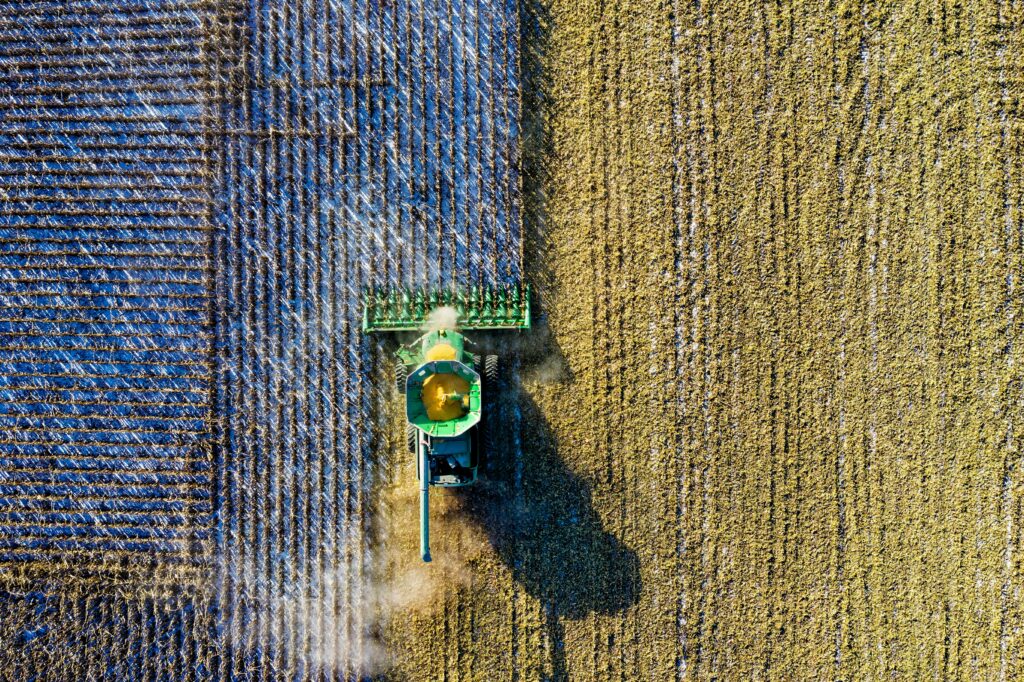
Smart agriculture applies digital technologies to optimize planting, irrigation, fertilization, harvesting, logistics, and soil analysis. Key applications include:
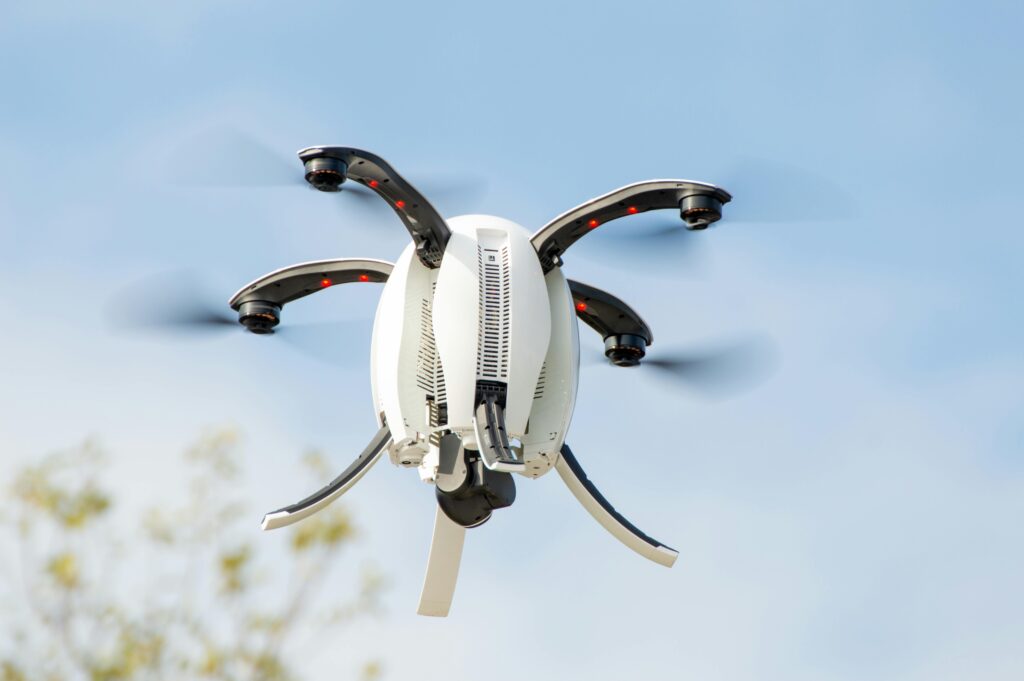
- Drones and sensors for real‑time crop and climate monitoring.
- Autonomous robots for harvesting, weeding, and targeted agrochemical application.
- Predictive AI to anticipate pests, disease pressure, or irrigation failure.
- Automated irrigation systems linked to satellite or localized climate networks.
- Blockchain & food traceability for more transparent, resilient supply chains.
According to Markets and Markets, the global precision agriculture market will exceed USD 20.8 billion by 2025, and the U.S. is at the epicenter of this expansion.
Why Invest in AgTech in the United States?
| Competitive Advantage | Detail |
|---|---|
| Large domestic consumption | The U.S. is one of the world’s largest agricultural producers and food consumers. |
| Advanced infrastructure | Strong energy grid, satellite connectivity, logistics, and transport. |
| Institutional support | USDA programs and innovation funding reduce risk for early adopters. |
| Established AgTech ecosystem | Silicon Valley innovation converges with major farm belts in California, Iowa, Texas, Arizona, and beyond. |
| Favorable legal framework | Strong IP protections plus grants, cost‑share programs, and subsidized loans. |
Active Government Supports & Programs
The U.S. Department of Agriculture (USDA) and related federal entities operate multiple funding channels to modernize agriculture and accelerate technology adoption.
1. Farm Bill
- The Agriculture Improvement Act (Farm Bill) allocates over USD 860 billion across five years of agricultural, nutrition, insurance, conservation, and rural development programs.
- Includes direct subsidies, crop insurance premium support, conservation incentives, technology adoption cost‑share, and financing mechanisms through USDA Rural Development.
2. Environmental Quality Incentives Program (EQIP)
- Cost‑share support of up to 75% for eligible conservation and resource‑efficiency practices.
- Eligible technologies often include smart irrigation controllers, soil‑moisture sensor networks, variable‑rate equipment, and electric or autonomous field machinery tied to resource conservation outcomes.
3. Agriculture Innovation Agenda
- National initiative to boost productivity while cutting the ag sector’s environmental footprint.
- Targets include a 50% reduction in agriculture’s net greenhouse gas footprint by 2050 through technology adoption, data integration, and improved input efficiency.
- Offers grants, challenge programs, and public‑private partnership pathways.
4. Urban Agriculture & Innovative Production Program
- USD 14.4 million in grants (latest cycle) to support urban farms, indoor/controlled environment farming, hydroponics, and automated production systems in metro areas.
5. National Institute of Food and Agriculture (NIFA)
- Competitive grants to universities, startups, and consortia for applied research in AI, robotics, automation, digital agronomy, and biological innovation.
Financial Landscape: Public & Private Capital Flows
Investment in agricultural technology in the U.S. has expanded rapidly in recent years.
| Category | Estimated Investment (2024) |
| AgTech startups | USD 6.6 billion |
| Agricultural robotics | USD 399 million |
| AI in agriculture (last decade) | USD 777 million total; USD 183M in 2024 alone |
| USDA innovation & urban agriculture grants (recent) | USD 14.4 million |
| Farm Bill program pool (multi‑year) | USD 860+ billion |
Leading companies attracting large rounds and partnerships include Carbon Robotics, Monarch Tractor, John Deere, Raven Industries, and FarmWise—all active in automation, computer vision, precision application systems, or autonomous platforms.
Key Opportunity Areas for Investors
| Tech Subsector | Investment Opportunity | Maturity Level |
| Drones & computer vision | High demand for crop health, pest detection, and variable treatment mapping. | Medium |
| Autonomous tractors | Replacement cycle for legacy mechanization; strong OEM + startup pipeline. | High |
| Smart irrigation & water optimization | Critical in arid and water‑stressed regions; qualifies for conservation incentives. | High |
| Predictive AI for yield & risk | Insurance, finance, and farm managers seeking data‑driven forecasts. | Medium |
| Automated urban/indoor farming | Scalable CEA, hydroponics, energy‑integrated systems in cities. | Emerging |
Strategic Positioning: How to Participate
1. Co‑invest with Farm Bill cost‑share streams. Pair venture capital or private equity with growers accessing EQIP or conservation incentive funds to lower deployment costs of tech hardware.
2. Finance equipment‑as‑a‑service models. Robotics, autonomous implements, and AI scouting services can be leased to growers to reduce up‑front CapEx.
3. Build data platforms tied to crop insurance. Predictive analytics that integrate weather, soil moisture, and management data can reduce actuarial risk—appealing to insurers and lenders.
4. Target water‑use efficiency technologies. Western states facing drought regulation are prime markets for sensor‑driven irrigation and adaptive fertigation systems.
5. Urban & controlled‑environment agriculture portfolios. Public funds + municipal incentives + food security policies support distributed indoor production close to consumers.
Conclusion: Why Now?
U.S. agriculture is in the midst of a structural transformation driven by technological innovation, sustainability mandates, and evolving government support. Investors entering the sector today have the opportunity to:
- Capture attractive returns in a market with persistent food demand.
- De‑risk deployments through federal cost‑share, loan guarantees, and targeted grants.
- Participate directly in the digital transformation of one of humanity’s foundational industries.